

Unicompartmental Knee Replacement
What is a unicompartmental knee replacement?
Unicompartmental knee replacement, also known as partial knee replacement, is a surgical procedure that replaces only the damaged section of the knee joint, rather than the entire joint. The knee is divided into three compartments, and this procedure is suitable when arthritis or damage is confined to just one of them.
Dr Varun Arora performs unicompartmental knee replacement for suitable patients across Melbourne and regional Victoria, aiming to preserve as much healthy bone, cartilage, and ligament as possible.
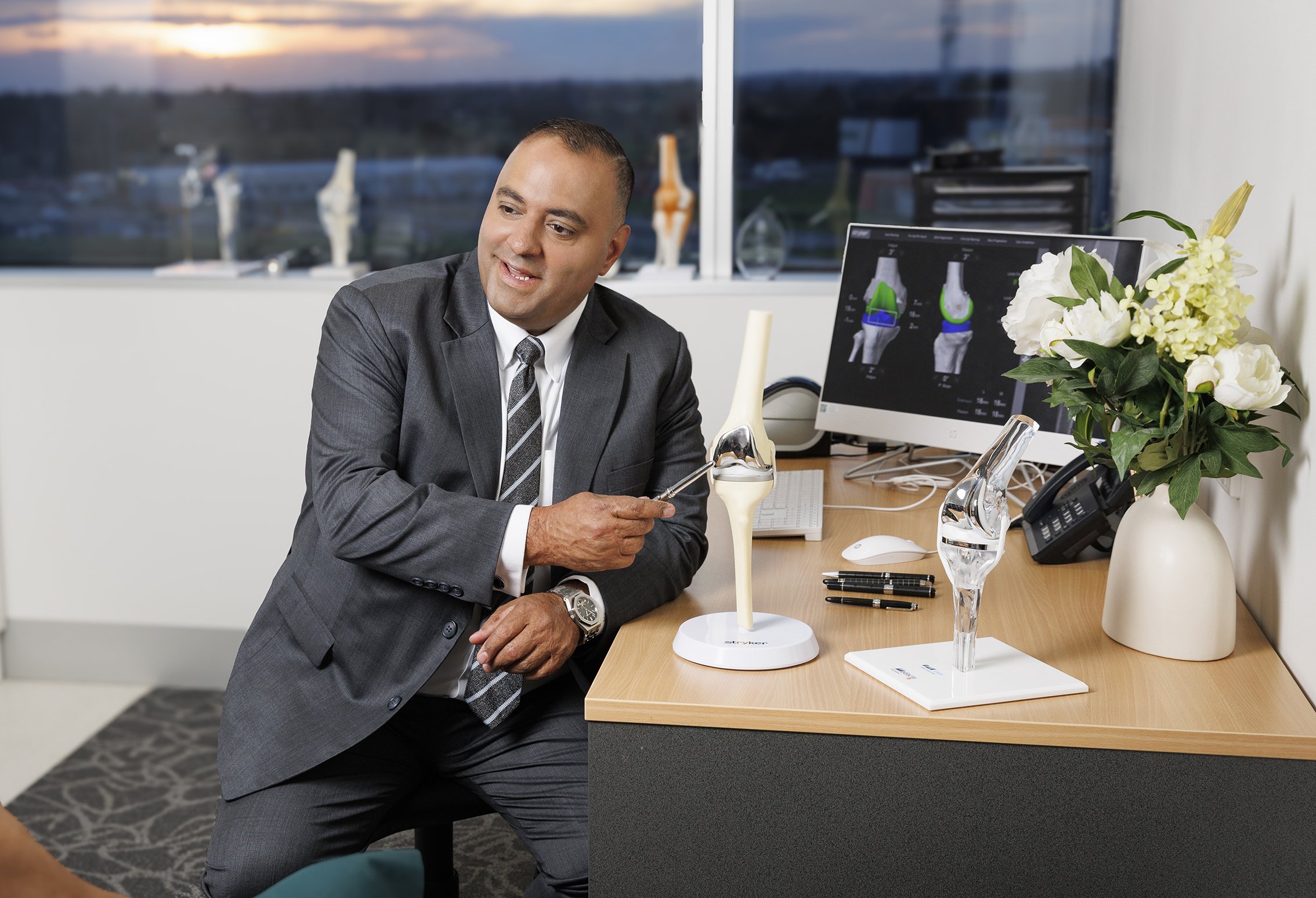
What is involved in unicompartmental knee replacement?
Preparation of the bone
Only the damaged compartment of the knee is prepared, with the surgeon removing a smaller amount of bone and cartilage than would be required for a total knee replacement.
Implantation
A smaller prosthesis is fitted to the affected compartment, replacing the damaged surfaces while leaving healthy parts of the joint, along with the knee's original ligaments, untouched.
Alignment and testing
The surgeon checks alignment and joint mechanics carefully, testing the knee's movement and stability before closing the incision.
Your recovery
Because less tissue is disrupted than in a total knee replacement, many patients experience a comparatively quicker early recovery, though this varies between individuals. Physiotherapy and a structured rehabilitation program remain an important part of recovery.
What is robotically assisted unicompartmental knee replacement?
Robotic-assisted technology can also be used for partial knee replacement, using imaging to build a personalised surgical plan that helps guide precise bone preparation and implant positioning within the affected compartment.
As with any robotic-assisted procedure, the system supports the surgeon's planning and technique; Dr Arora performs and controls every step of the operation. Suitability for robotic assistance will be discussed during your consultation.
General risks overview
As with any surgical procedure, unicompartmental knee replacement carries risks. Potential risks and complications can include:
Infection
Blood clots (deep vein thrombosis or pulmonary embolism)
Stiffness or reduced range of motion
Ongoing pain
Progression of arthritis in other parts of the knee, which may require future conversion to a total knee replacement
Implant wear or loosening
Nerve or blood vessel injury
Risks associated with anaesthesia
This is a general overview and not a complete list. Dr Arora will discuss the risks and benefits relevant to your individual case in detail.
Unicompartmental Knee Replacement Frequently Asked Questions
Am I a candidate for partial rather than total knee replacement?
This depends on how much of the knee is affected by arthritis, which Dr Arora will assess through examination and imaging.
How is recovery different from a total knee replacement?
Many patients find early recovery more comfortable due to less tissue disruption, though individual experiences vary.
Will I need a total knee replacement later on?
Some patients may eventually require conversion to a total knee replacement if arthritis progresses in other compartments. This will be monitored over time.

Knee Surgery in Melbourne
If you would like to discuss your symptoms or treatment options, contact Dr Varun Arora to schedule a consultation.