
3D Planning & Patient-Specific Instrumentation (PSI)
Your joint replacement, planned for your bones.
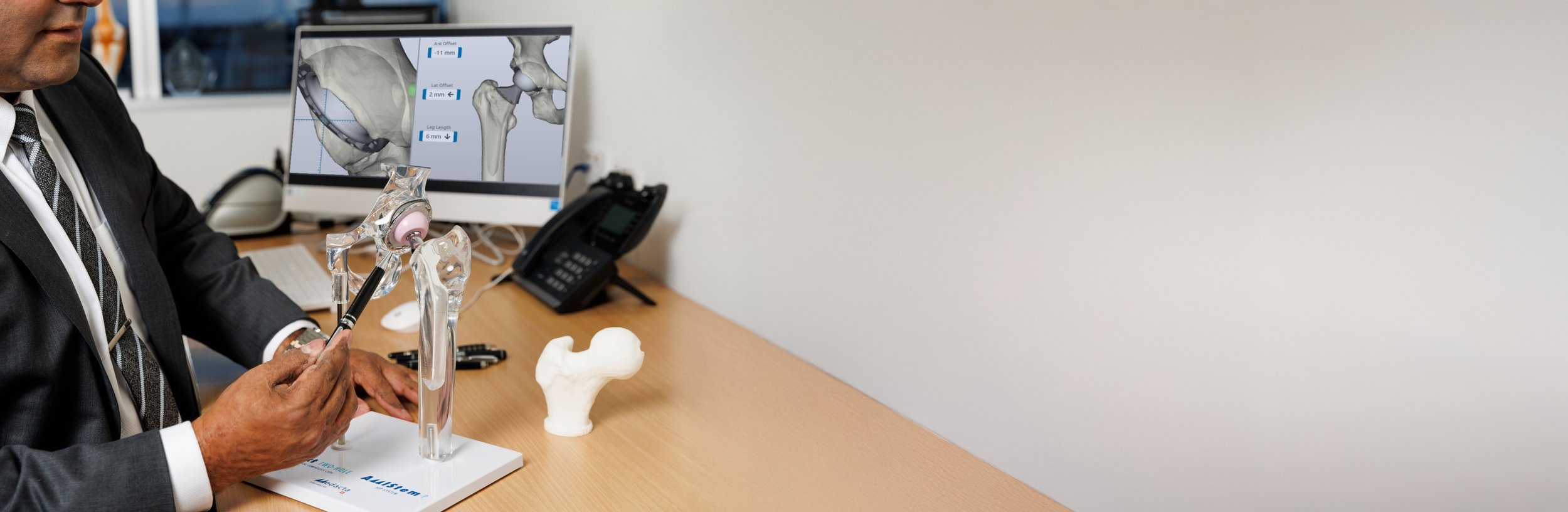
No two hips or knees are the same shape. With custom 3D planning, Dr Varun Arora plans your joint replacement on a computer using a 3D model built from your own scans, before you reach theatre. Where suitable, the plan is turned into patient-specific instrumentation (PSI): cutting guides 3D-printed to fit your bone like a glove, made only for you and used only in your operation.
Why plan in 3D?
Standard planning uses flat x-rays. A 3D model shows the true shape, size and rotation of your bones, so the operation can be rehearsed in detail. Implant sizes are chosen and every cut is planned for your anatomy, before the first incision.
Made for your bones
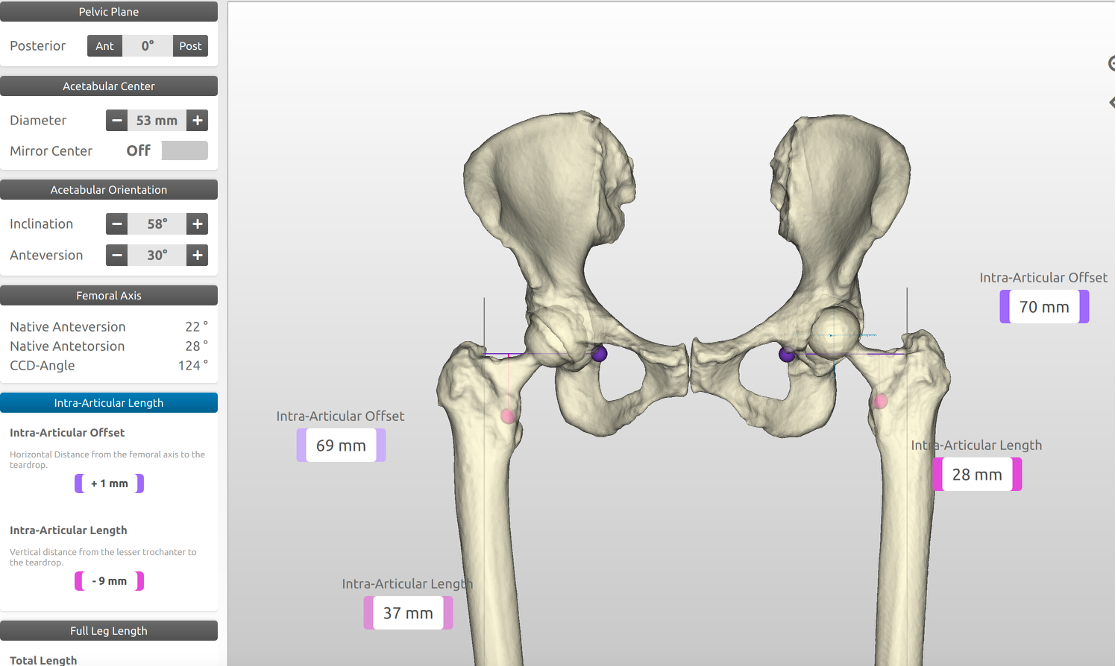
Each guide is designed from your 3D model so that its inner surface is a mirror image of your bone. It fits like a glove and sits in only one position, matching the contours of your joint. Slots and pins in the guide then line up the bone cuts and implant position exactly as planned.
Because the guides are single-use and made for you, they arrive sterile for your operation and are not used for anyone else.
3D planning for hip replacement
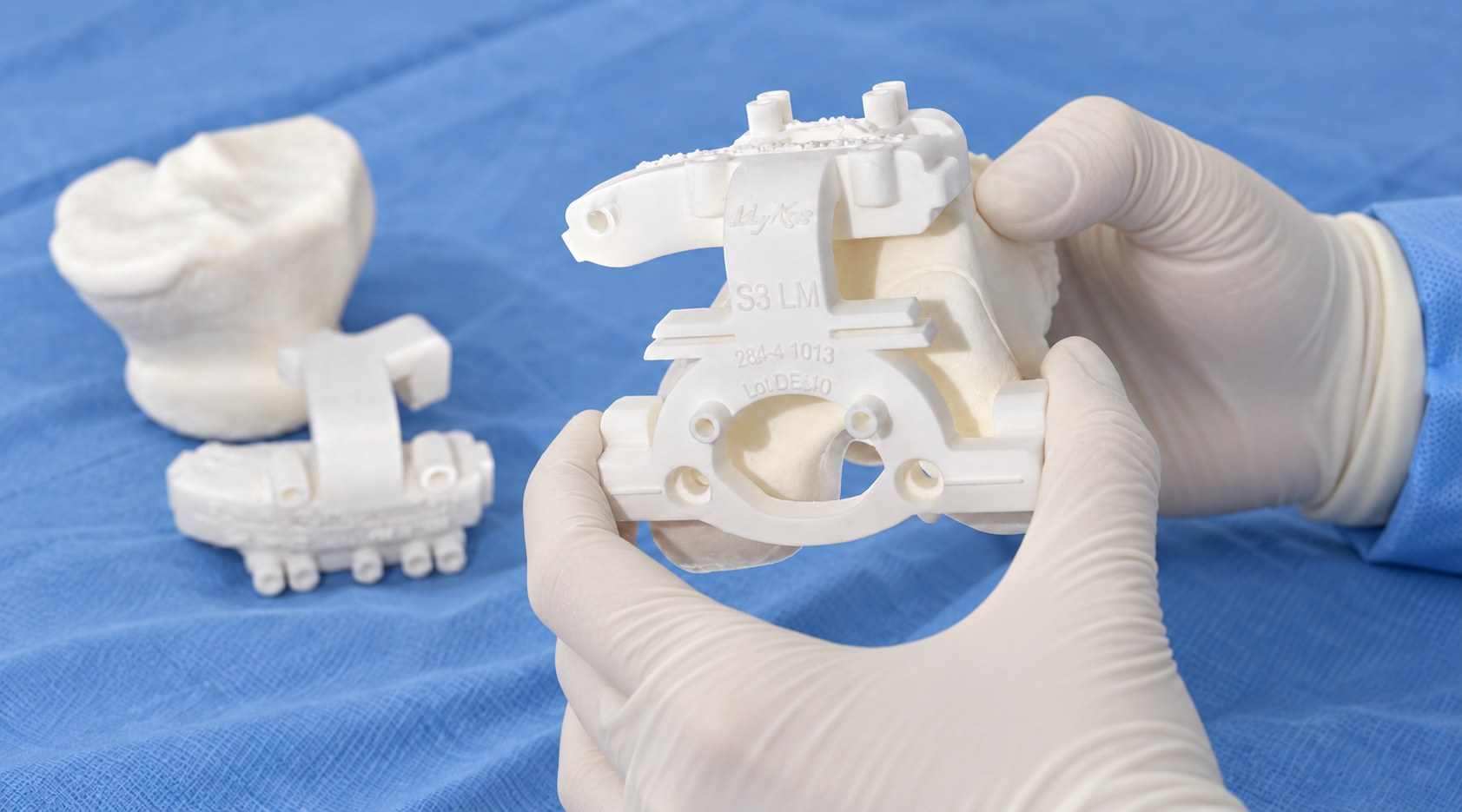
Your hip and spine work together. When you sit, stand or bend, your pelvis tilts, and the amount it moves is different for everyone. In people with a stiff or fused lower back, the pelvis moves very little, which changes the ideal position for the hip socket.
Functional hip planning combines a CT scan with x-rays taken standing and sitting to measure how your pelvis moves. The cup angle is then planned for the way you move, with the aim of reducing the risk of impingement and dislocation.
3D planning and PSI for knee replacement
A CT or MRI scan and a full-length standing x-ray are used to build a 3D model of your knee and leg alignment. Dr Arora plans each bone cut and implant position for your anatomy, then reviews and approves the final plan. Guides for the thigh bone and shin bone are 3D-printed to fit your knee like a glove. In theatre, the cuts are made through the slots in each guide.
What is customised, and what isn't
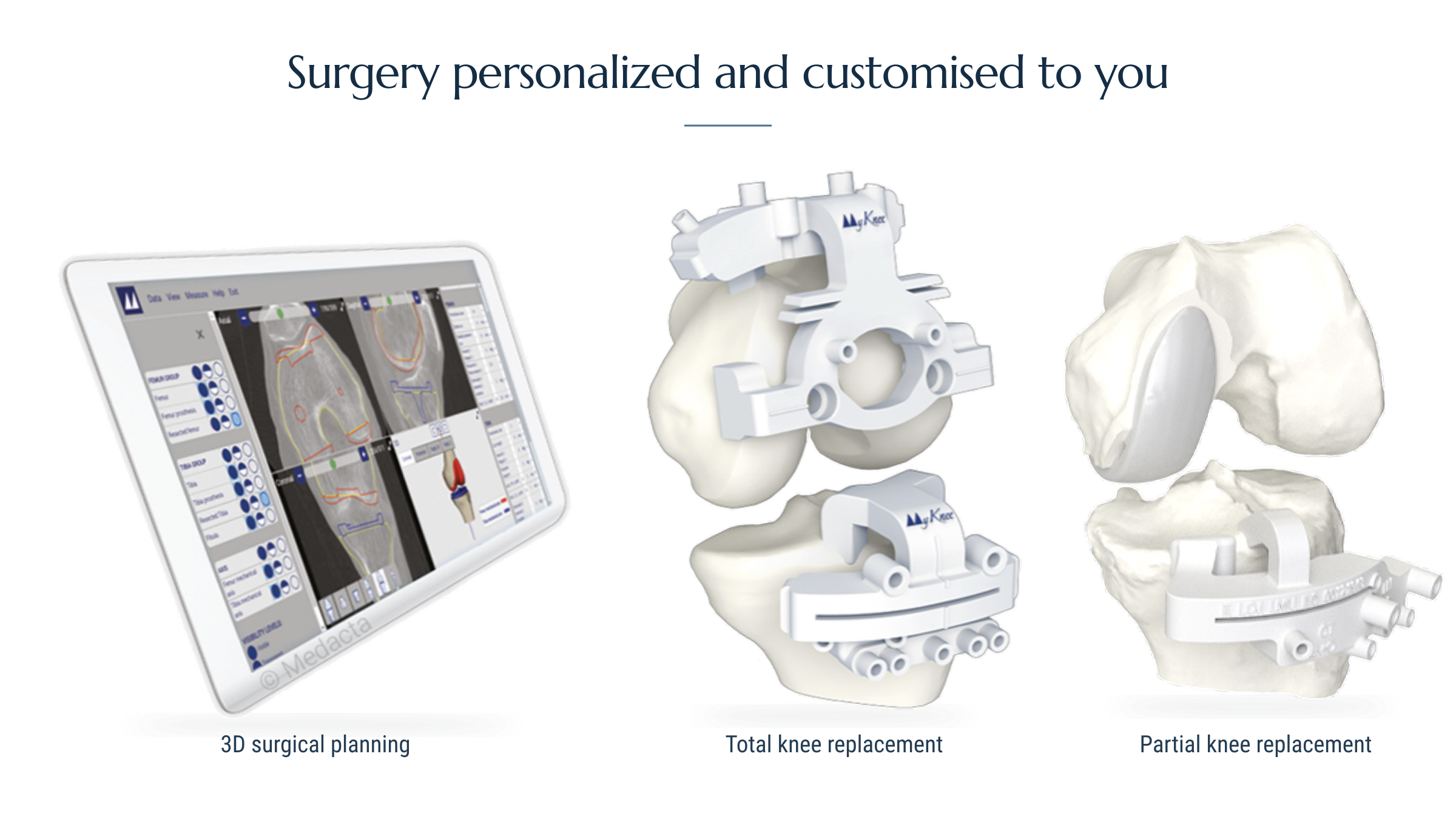
Customised for you: the 3D model of your joint, the surgical plan, and the cutting guides.
Standard: the implants themselves, which are well-established designs with long registry track records, chosen in the size that best fits you.
The process.
-
1. Consultation.
Dr Arora confirms whether 3D planning and PSI suit you.
-
2. Imaging.
Scans and x-rays, ideally 6–8 weeks before surgery.
-
3. Your plan.
A 3D model of your joint is built, and Dr Arora reviews, adjusts and approves the plan.
-
4. Your guides.
Guides are 3D-printed, sterilised and sent to the hospital, typically within 4–6 weeks.
-
5. Surgery.
Each guide is fitted to your bone and checked against your anatomy before each cut. Standard instruments are always available.
-
6. Recovery.
The same as for any hip or knee replacement.
Potential benefits
A detailed plan made for your anatomy, which is especially useful with deformity or unusual bone shapes
Implant sizes known in advance, so fewer instrument trays may be needed
For knees, no rods inside the thigh bone canal, which helps after previous fractures or with existing hardware
Personalised cup positioning for patients with a stiff or fused spine
Limitations
Important to know
Extra imaging is needed. CT involves radiation, and MRI is unsuitable for some patients.
Planning and manufacture take several weeks, so it isn't suitable for urgent surgery.
Metalwork near the joint can distort scans.
Ask the rooms whether any out-of-pocket costs apply.
What does the evidence show?
Studies show that patient-specific guides position implants as accurately as conventional instruments, and in some studies more consistently. Long-term registry data have not yet shown a lower revision rate for knee replacements performed with patient-specific guides. Dr Arora uses this technology where to add value to the plan for your joint.
Frequently Asked Questions
-
No. The plan and guides are made for you, and the implants are standard designs in the size that best fits you. Fully custom implants are reserved for rare, complex cases.
-
They are designed from a 3D model of your own bone, so their inner surface matches your bone's contours exactly, like a key in a lock. Fit is checked against anatomical landmarks before each cut.
-
Both deliver a 3D plan made for your joint. PSI does it with guides made before surgery, and robotics with real-time feedback in theatre. Dr Arora will recommend what suits you, and that may be standard instruments.
-
Guides are checked before each cut. If anything doesn't match the plan, the operation is completed with conventional instruments.
-
Planning and manufacture take 4–6 weeks after your scan, and this is built into your surgery date.
Further reading
External links are provided for general information.
General information only. Any surgical or invasive procedure carries risks. Before proceeding, you should seek a second opinion from an appropriately qualified health practitioner.

BOOK A CONSULTATION
Pelvis & Hip Surgery in Melbourne
If you would like to discuss your symptoms or treatment options, call (03) 9088 8420 or contact Dr Varun Arora.