

Robotic Hip & Knee Replacement
Overview
Robotic-assisted joint replacement combines a personalised 3D plan of your joint with a robotic arm that helps carry out that plan in theatre. Dr Varun Arora offers robotic assistance for total knee, partial knee and selected total hip replacements.
The system supports the surgeon's planning and technique. Dr Arora performs and controls every step of the operation, and the robotic arm cannot move or cut on its own.
How does it work?
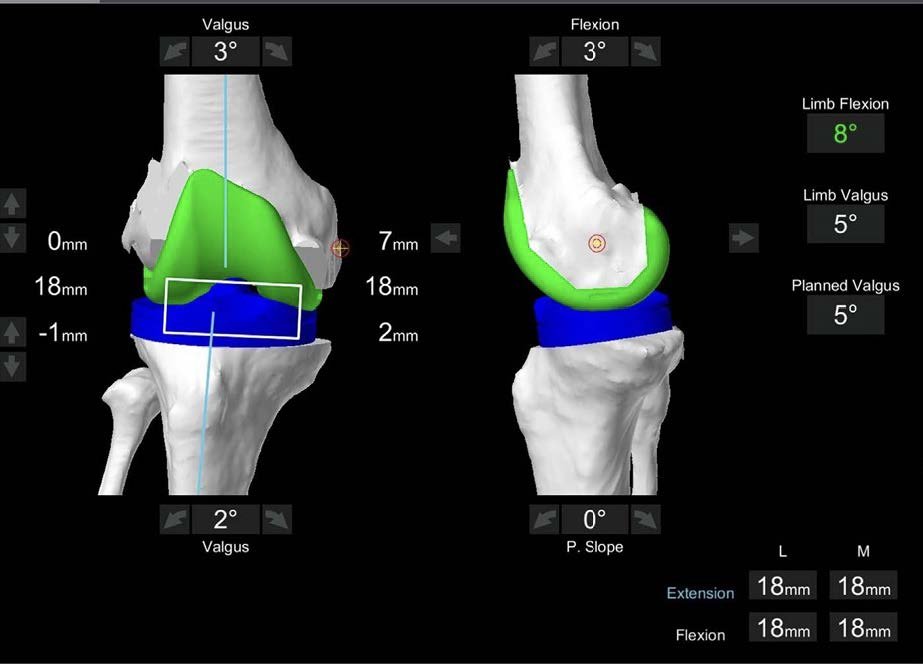
Your 3D plan
A CT scan before surgery is converted into a 3D model of your bones. Dr Arora uses it to plan implant size, position and alignment for your anatomy.
Registration and assessment
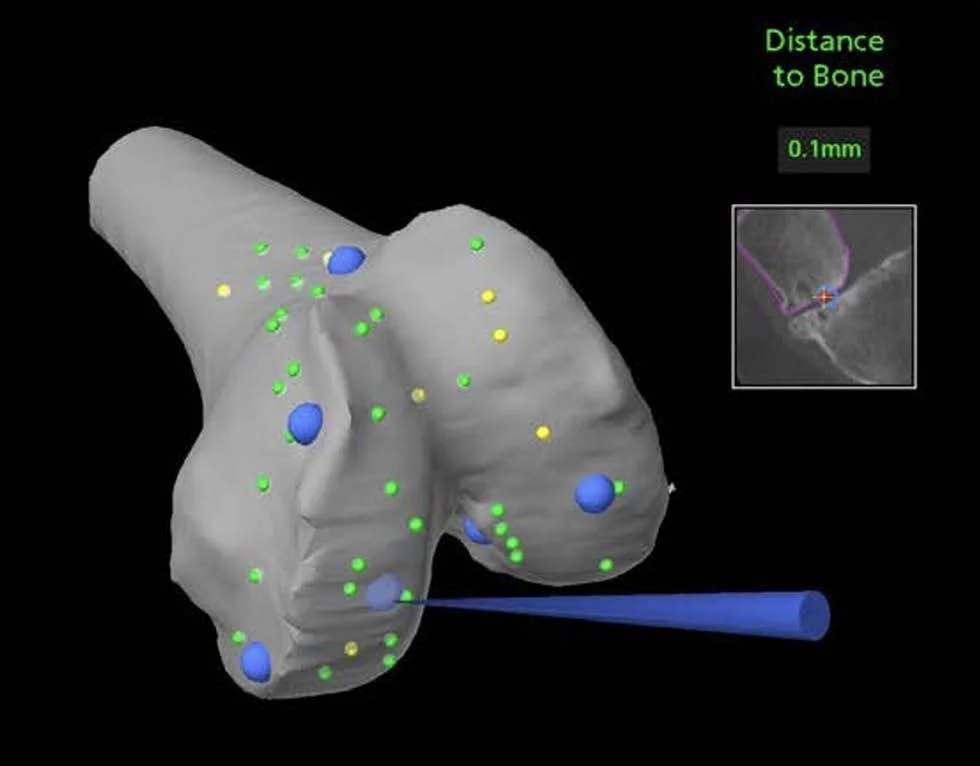
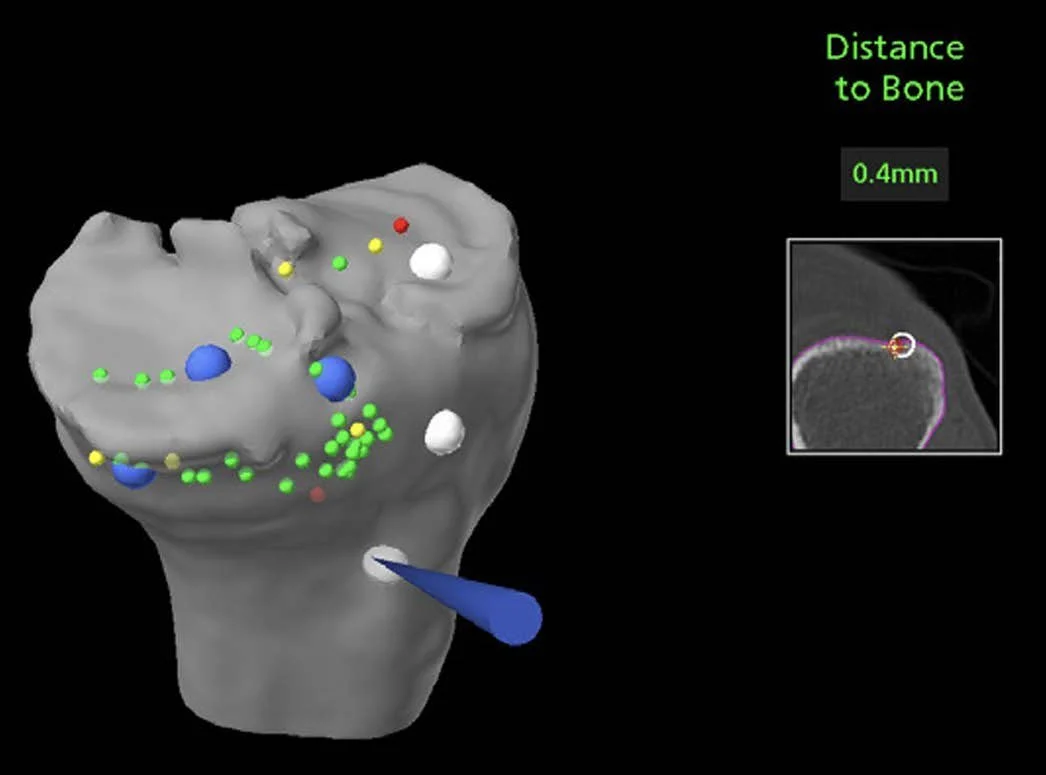
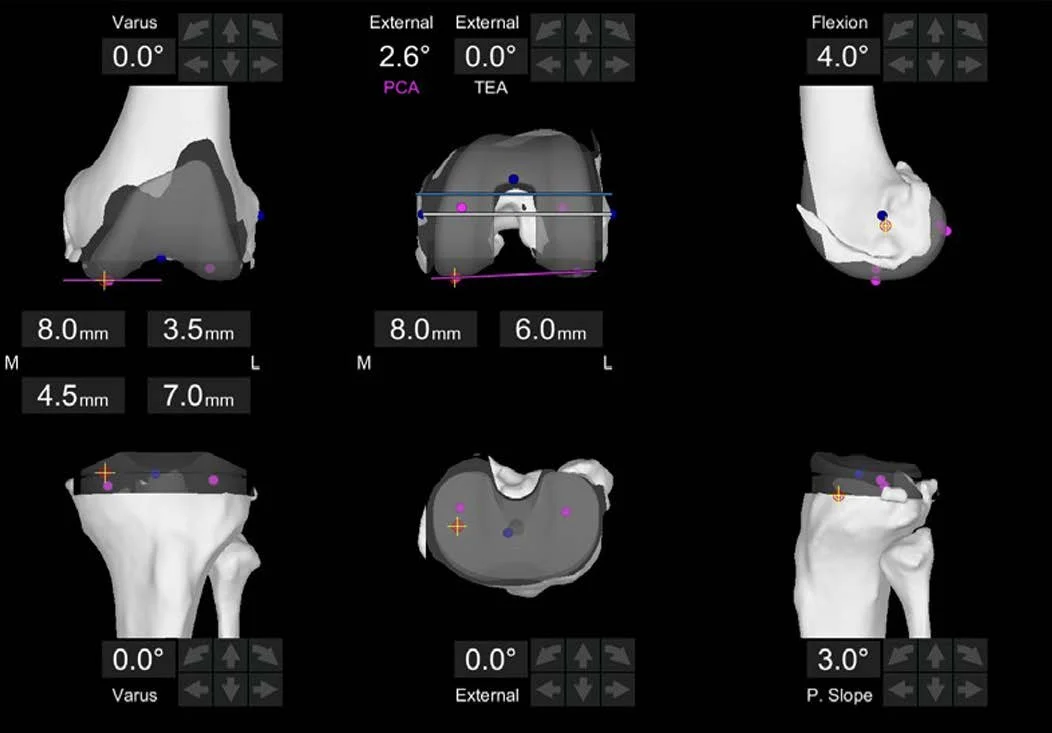
In theatre, your bone is matched to the 3D model. In knee replacement, ligament tension is measured through the range of movement, and the plan can be adjusted before any bone is cut.
Guided bone preparation
Dr Arora guides the robotic arm, which provides haptic boundaries (a physical "stop") to help keep bone preparation within the planned area and protect surrounding ligaments and soft tissues.
Procedures
Total knee replacement
The plan sets the bone cuts and alignment, and helps balance the ligaments around the new knee.
Partial (unicompartmental) knee replacement
Only the damaged compartment is resurfaced. Because partial knee replacement depends on precise positioning, robotic assistance is widely used for it.
Total hip replacement
The robotic arm helps prepare the socket and set the cup at the planned angles, and leg length and offset are reported during surgery. It can be combined with the anterior approach.
What does the evidence show?
Published studies show that robotic-assisted surgery positions implants more accurately and consistently relative to the plan than conventional instruments. Some studies also report less soft tissue disruption and less early pain after knee replacement.
It is not yet known whether this accuracy leads to longer-lasting implants or better long-term function, and large registries have not shown lower revision rates for robotic knee replacement. Conventional techniques remain an excellent option, and Dr Arora will give you a balanced view.
Is it right for me?
Robotic assistance suits many patients. It may be particularly useful for unusual joint shapes, deformity after previous fractures, or partial knee replacement. It may not be suitable if extensive metalwork interferes with the CT scan, or in some revision procedures.
Frequently Asked Questions
-
No. Dr Arora makes every decision and controls every movement. The arm provides guidance and boundaries based on his plan.
-
Some patients have less early pain, particularly after knee replacement, but recovery depends mostly on your health and rehabilitation. The recovery program is the same as for conventional surgery.
-
Both start with a 3D plan. Robotics delivers it with a robotic arm and real-time feedback, while PSI uses 3D-printed guides made for your bones. See 3D Planning & PSI.
Further reading
External links are provided for general information.
External links are provided for general information only. Any surgical or invasive procedure carries risks. Before proceeding, you should seek a second opinion from an appropriately qualified health practitioner.

BOOK A CONSULTATION
Pelvis & Hip Surgery in Melbourne
If you would like to discuss your symptoms or treatment options, call (03) 9088 8420 or contact Dr Varun Arora.