

Total Knee Replacement
What is total knee replacement surgery?
Total knee replacement is a well-established operation for severe knee arthritis or joint damage that has not responded to non-surgical treatment. The worn surfaces of the knee are removed and replaced with prosthetic components, with the aim of reducing pain, correcting deformity and restoring movement.
Dr Varun Arora performs total knee replacement for patients across Melbourne and regional Victoria. Surgery is usually considered once medication, physiotherapy, weight management and injections no longer provide adequate relief. See Knee Arthritis.
Total or partial knee replacement?
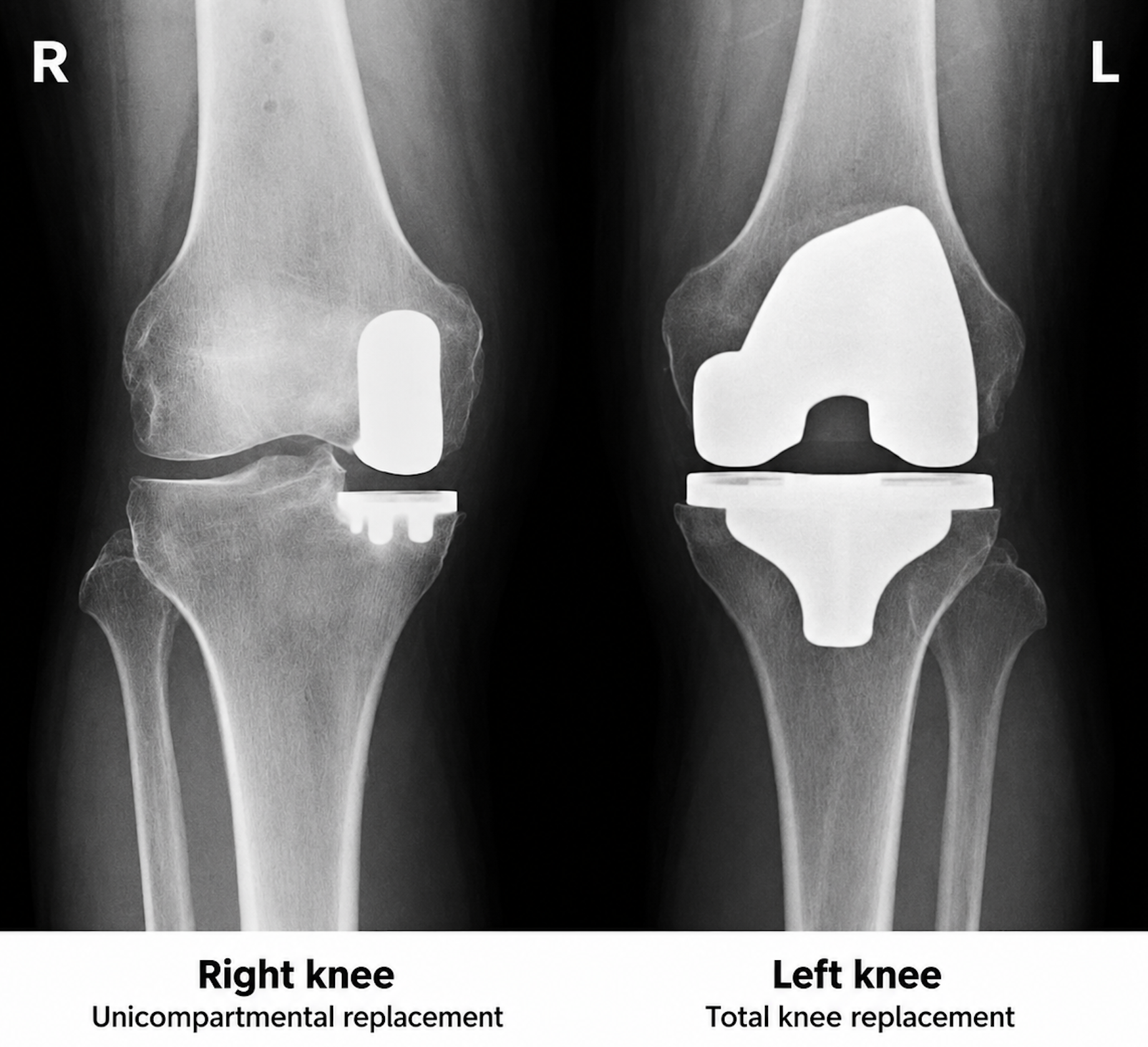
The knee has three compartments. When arthritis is limited to one of them, a partial (unicompartmental) knee replacement may be possible. It resurfaces only the damaged area and keeps the healthy cartilage and ligaments. When arthritis affects more of the joint, a total knee replacement is usually recommended.
Planning & technology
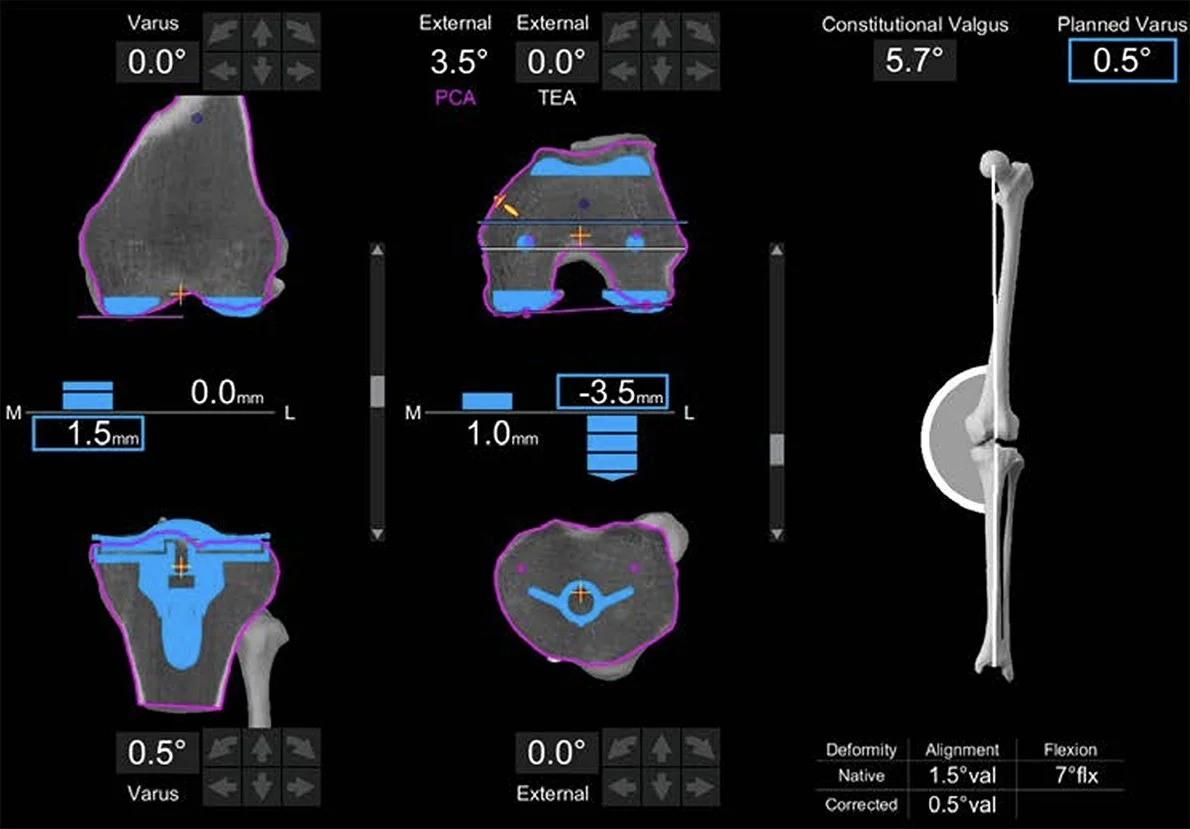
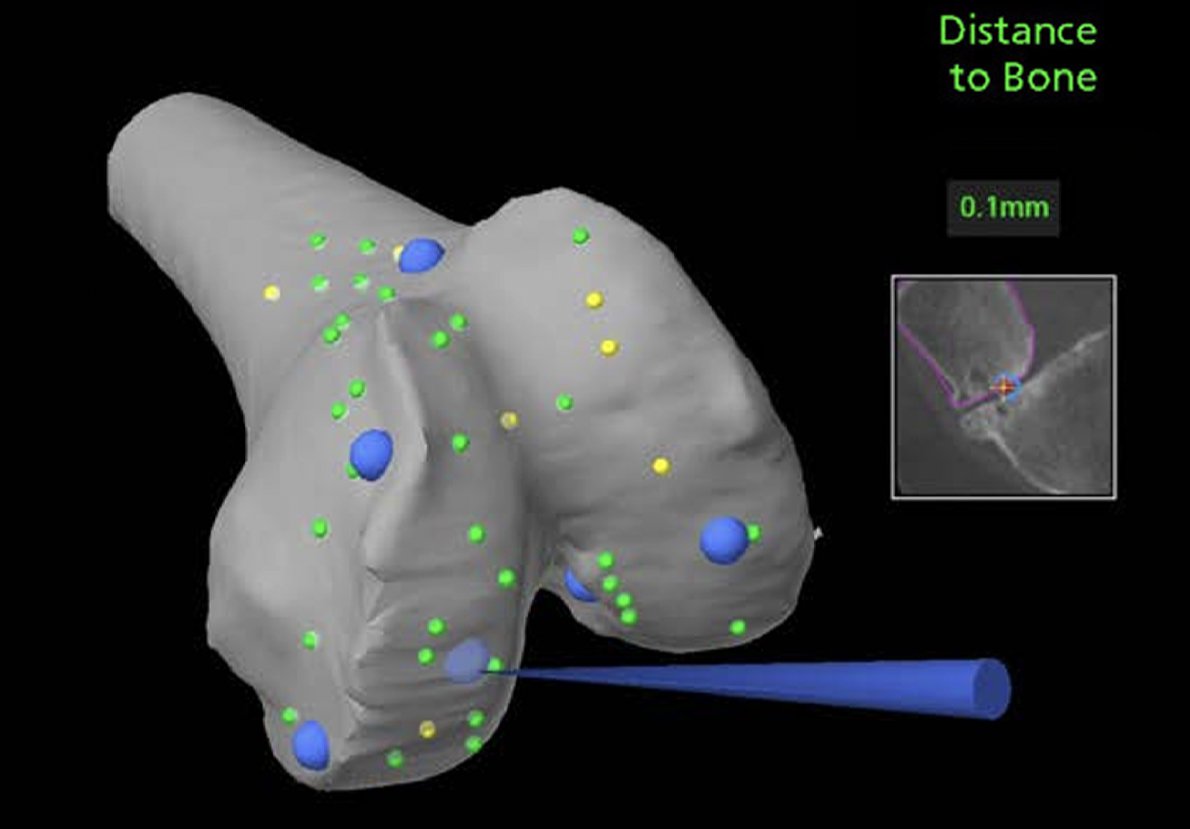
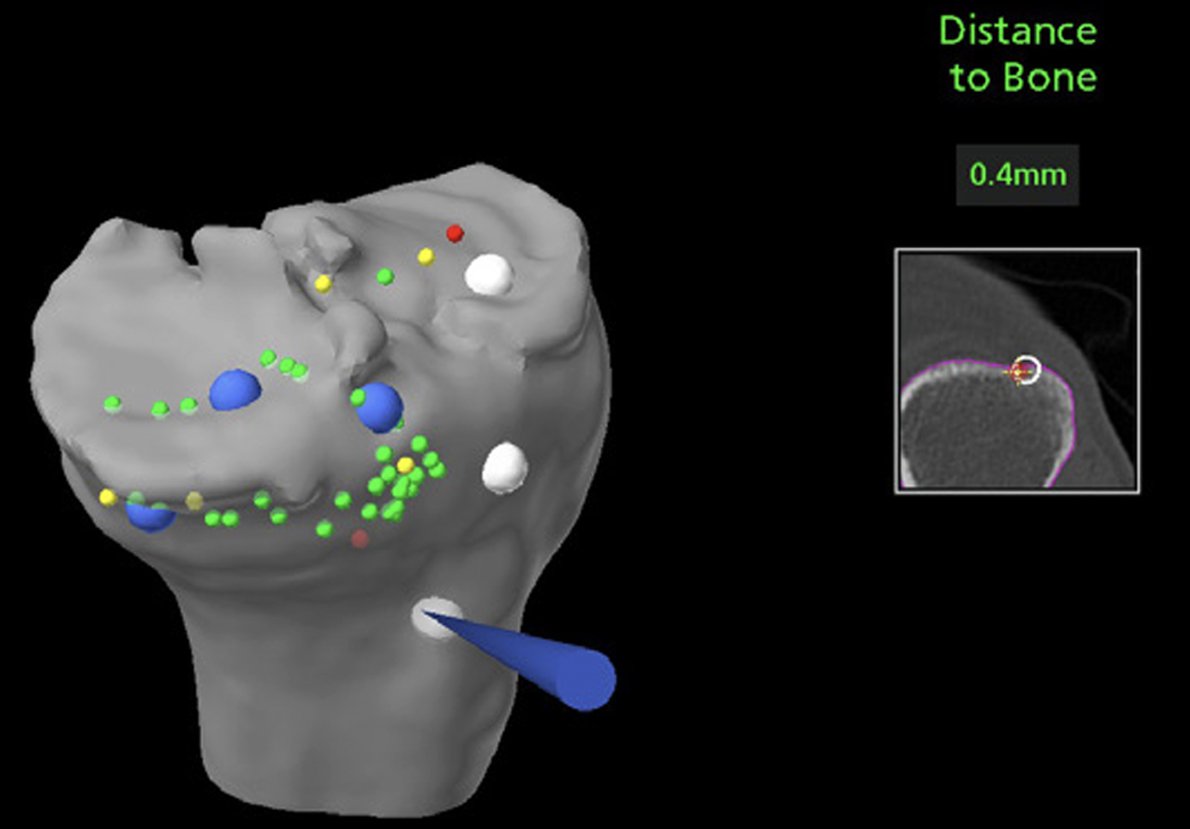
Dr Arora offers technology that builds a personalised 3D plan of your knee before surgery:
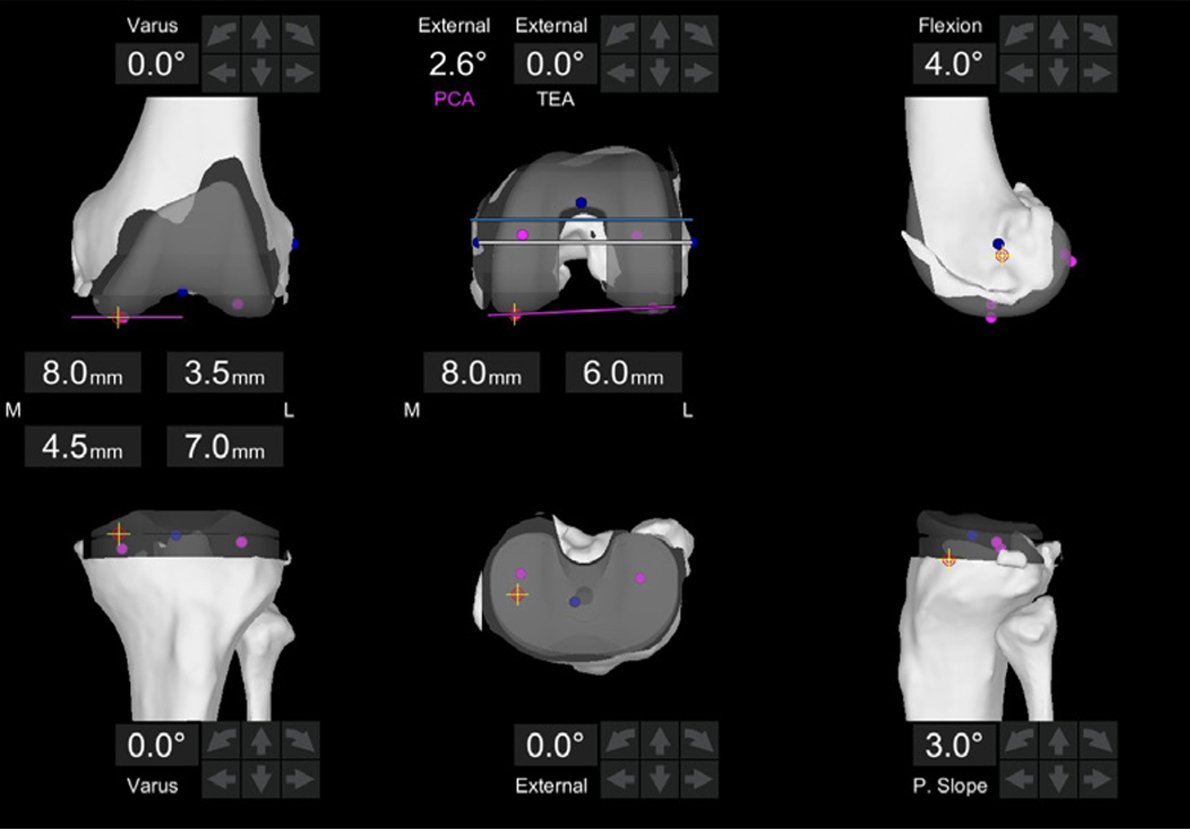
Robotic-assisted knee replacement. A CT-based 3D plan is carried out in theatre with the help of a robotic arm. Ligament balance can be measured and the plan fine-tuned before bone is prepared. The system supports Dr Arora's planning and technique, and he performs and controls every step of the operation.
3D planning with patient-specific cutting guides. Your knee is planned in 3D from your own scans, and cutting guides are 3D-printed to fit your bone like a glove. They are made only for you, so the planned cuts can be made accurately with fewer instruments.
Whether either option suits you depends on your anatomy and circumstances, and will be discussed at your consultation.
What is involved in total knee replacement surgery?
Preparation of the bone
The damaged cartilage and a thin layer of bone are removed from the end of the thigh bone (femur), the top of the shin bone (tibia) and, where required, the underside of the kneecap (patella). This creates precisely shaped surfaces for the new components.
Implantation
Metal components are fitted to the femur and tibia, with a durable plastic spacer between them that allows smooth, gliding movement.
Alignment and testing
Leg alignment and the balance of the ligaments are checked. The knee is moved through its full range to test stability before the incision is closed.
Your recovery
Most patients walk with assistance within a day of surgery, supported by the physiotherapy team. Rehabilitation continues over several weeks to months. Most people return to normal activities within three to six months and keep improving for up to a year.
Recovery at a glance.
-
Day 0–1
Walking with a frame and starting knee bending exercises
-
2–4 nights
Usual hospital stay, with or without inpatient rehabilitation
-
2–6 weeks
Focus on bending, straightening and weaning off walking aids
-
around 6 weeks
Driving, once cleared at review
-
3-6 months
Most normal activities
-
Up to 12 months
Swelling settles and strength continues to improve
Everyone recovers differently. See Post-operative Recovery & Rehab Protocols.
General risks overview
IMPORTANT TO KNOW
As with any surgical procedure, total knee replacement carries risks. Potential risks and complications include:
Infection
Blood clots (deep vein thrombosis or pulmonary embolism)
Stiffness or reduced range of motion
Ongoing pain
Implant wear, loosening or the need for future revision surgery
Nerve or blood vessel injury
Fracture around the implant
Alignment changes
Risks associated with anaesthesia
This is a general overview and not a complete list. Dr Arora will discuss the risks and benefits relevant to you in detail before surgery.
Knee Replacement Frequently Asked Questions
Deciding on surgery
-
When knee pain is limiting your walking, sleep, work or the things you enjoy, and non-surgical treatment is no longer helping enough. It's a quality-of-life decision you make with Dr Arora, not a particular x-ray stage.
-
There is no strict age limit. Younger, active patients are more likely to need a revision in their lifetime. Older patients are assessed on overall health and fitness rather than age alone.
-
Exercise and education programs (such as GLA:D), weight management, physiotherapy, simple pain relief, bracing and, in some cases, injections. These approaches are recommended in Australia's national care standard for knee osteoarthritis.
-
If arthritis is confined to one compartment and the ligaments are healthy, a partial knee replacement may be possible. Dr Arora will assess this with examination and imaging. See Unicompartmental Knee Replacement.
-
Yes. A higher body mass index (BMI) increases the risk of wound problems, infection and some other complications. Even modest weight loss before surgery can help, and it reduces load on your knees.
-
Usually cobalt-chrome or titanium components on the thigh bone and shin bone, with a highly durable plastic insert between them. Most are fixed with bone cement, and some are press-fit. Options are available for people with a confirmed metal allergy.
-
Australian registry data show that the large majority of modern knee replacements are still functioning 15 to 20 years after surgery. Longevity depends on implant choice, alignment, activity level and general health.
-
For selected healthy patients this may be possible, but recovery is more demanding. Many people have them done a few months apart. It is discussed individually.
Preparing for surgery
-
Strengthen your thigh muscles with prehab exercises, stop smoking, have any dental problems fixed, keep diabetes well controlled, and prepare your home. See Preparing for Surgery.
-
Some medications, including blood thinners, some arthritis and immune medications, certain diabetes medications and some supplements, may need to be paused. You'll get specific instructions. Please don't stop anything without advice.
-
Weight-bearing x-rays, and for robotic or patient-specific surgery a CT or MRI scan for 3D planning. Blood tests and a pre-admission check are arranged before surgery.
In hospital
-
Most patients have a spinal anaesthetic with sedation, often with a nerve block for pain relief. Some have a general anaesthetic. Your anaesthetist will discuss the options.
-
Usually around 1.5 to 2 hours, plus time in recovery.
-
A combination of local anaesthetic placed around the knee during surgery, nerve blocks, regular pain relief, ice and elevation. Knee replacement is often more uncomfortable than hip replacement in the first few weeks, and pain control is planned with that in mind.
-
Usually two to four nights. Some patients benefit from a short stay in inpatient rehabilitation.
Recovery
-
Getting the knee fully straight and bending past 90 degrees in the first few weeks are key early goals. Most people reach around 110 to 120 degrees over the following months. Daily exercises make a real difference.
-
Some swelling and warmth are normal for three to six months, and sometimes up to a year. Ice, elevation and pacing your activity help.
-
Stiffness is one of the more common issues after knee replacement. If progress stalls despite physiotherapy, a gentle manipulation under anaesthetic is occasionally recommended, usually within the first three months.
-
Small skin nerves are cut during the incision, so a patch of numbness on the outer side of the scar is very common. It usually shrinks over time and doesn't affect how the knee works.
-
By walking early, doing ankle and calf exercises, and taking blood-thinning medication for a set period after surgery.
-
Usually around six weeks, once you have good control of the knee, are off strong pain relief and have been cleared at review. Check with your car insurer too.
-
Desk-based work is often possible from four to six weeks. Physically demanding work may take three months or more.
-
Yes. You'll practise with the physiotherapist before discharge. "Up with the good, down with the bad" is a helpful rule early on.
-
For long-haul flights, it's usually advised to wait around six weeks because of blood clot risk. Discuss travel plans at your review.
-
Typically at two weeks, six weeks and around three months, then at one year and periodically after that.
Living with your new knee
-
Kneeling is safe for the implant, but many people find it uncomfortable because of the scar and numb skin. It often becomes easier with time, and a cushion helps.
-
A soft click from the components is common and usually harmless. Mention it at review if it is painful or getting worse.
-
Walking, cycling, swimming, golf, gym work and doubles tennis are commonly enjoyed. Running, jumping and contact sports place more load on the implant and should be discussed with Dr Arora.
-
It may. You don't need a special card. Just let security staff know.
-
Routine antibiotics before dental treatment are not generally required for most people with a joint replacement. Tell your dentist about your knee, and ask Dr Arora if you're unsure.
-
Contact us promptly if you have fever, increasing wound redness or discharge, a sudden increase in pain or calf swelling. If you have chest pain or shortness of breath, call 000.
Trusted resources
These independent sources give more information about knee arthritis and knee replacement.
External links are provided for general information. Dr Arora is not responsible for the content of external websites. Any surgical or invasive procedure carries risks. Before proceeding, you should seek a second opinion from an appropriately qualified health practitioner.

Knee Surgery in Melbourne
If you are experiencing knee pain and would like to discuss whether total knee replacement surgery is right for you, contact Dr Varun Arora to schedule a consultation.